The Truth About the Boya Magic: Pros, Cons, and Verdict
In the rapidly evolving landscape of content creation, the technical barriers to entry have never been lower. However, while high-definition video is now accessible via the smartphone in every pocket, high-quality audio remains a significant hurdle for many creators. Enter the Boya Magic, a product that has generated substantial buzz within the photography and videography communities. Positioned as a versatile, all-in-one audio solution, the Boya Magic promises to bridge the gap between amateur recordings and professional-grade soundscapes without the traditional complexity of XLR setups and external phantom power supplies.
The "Magic" moniker is a bold marketing choice, implying a level of effortless performance that often eludes budget-conscious audio gear. For creators working in the "Cameras" category—ranging from wedding videographers to investigative vloggers—the audio captured is often just as critical as the visual fidelity. A beautiful 4K image can be rendered unwatchable by wind noise, clipping, or a high noise floor. This article provides a comprehensive analysis of the Boya Magic, stripping away the marketing hyperbole to see if this device truly earns its name or if it is simply another entry in a crowded market of audio peripherals.
Understanding the Boya Magic Ecosystem
To understand where the Boya Magic fits, one must first understand the current state of camera-mounted audio. For years, the market was dominated by either bulky shotgun microphones that required specialized mounting or fragile lavalier systems that were prone to interference. The Boya Magic attempts to unify these needs by offering a hybrid approach. It is designed to interface seamlessly with Mirrorless, DSLR, and even cinema-style cameras, providing a level of physical integration that usually requires a much higher investment.
What sets this unit apart is its dual-purpose architecture. It serves not just as a primary capture device but as an intelligent interface. This means it can handle the pre-amplification duties that many mid-range cameras struggle with. Most modern mirrorless cameras have notoriously noisy pre-amps; when you turn up the gain in-camera, you often introduce a "hiss" that is nearly impossible to remove in post-production. The Boya Magic takes over this responsibility, sending a clean, boosted signal to the camera, allowing the user to keep the camera's internal gain at a minimum.
Detailed Product Analysis and Performance
When evaluating the Boya Magic, the first thing users notice is the build quality. Unlike previous generations of plastic-heavy accessories, the Magic utilizes a reinforced composite structure that feels substantial in the hand while remaining light enough not to upset the balance of a gimbal. For videographers who spend eight hours a day with a camera on their shoulder, every gram matters. The mounting system is particularly noteworthy, utilizing a high-tension cold-shoe adapter that minimizes vibration transfer—a common culprit for "thumping" sounds in handheld footage.
Audio Fidelity and Frequency Response
The core of the Boya Magic is its condenser capsule. In real-world testing, the frequency response is surprisingly flat, which is a compliment for an editorial-use microphone. It doesn't artificially "color" the sound with excessive bass boost (often used to hide poor quality) or shrill highs. Instead, it captures a naturalistic representation of the environment. For interviews, this means voices sound rich and authoritative. For ambient recording, such as capturing the rustle of leaves or the hum of a city, the microphone retains a sense of spatial awareness that mono-directional mics often lose.
The signal-to-noise ratio (SNR) is where the "Magic" reveals itself. In quiet environments, cheap microphones often produce a static-like hum. The Boya Magic maintains a very low noise floor, making it suitable for studio environments where the silence between words is just as important as the words themselves. This performance is largely due to the internal shielding, which protects the signal from electromagnetic interference (EMI) often caused by nearby smartphones or the camera’s internal Wi-Fi and Bluetooth radios.
Functional Versatility
The device features several physical controls that are tactile and responsive. There is a high-pass filter (cut at 80Hz or 150Hz) which is essential for outdoor shoots where traffic rumble or wind can ruin a take. Additionally, the gain control is stepped rather than a smooth dial, which prevents accidental changes during a shoot—a small but critical detail for professionals. The inclusion of a real-time monitoring jack is perhaps the most appreciated feature. Many entry-level cameras lack a headphone port; the Boya Magic provides one, allowing the creator to hear exactly what is being recorded before the file is even saved.
Pros and Cons of the Boya Magic
No piece of equipment is perfect, and the Boya Magic is no exception. While it excels in many areas, there are specific trade-offs that buyers should be aware of. Below is a breakdown of the strengths and weaknesses discovered through extensive field use.
Looking for the best Cameras & Photography deals on Amazon?
View Offers →Pros
- Superior Pre-Amp Quality: Significantly reduces the "hiss" common in DSLR and Mirrorless camera audio tracks.
- Dual-Connectivity: Works via standard 3.5mm TRS for cameras and often includes adapters for USB-C or Lightning, making it future-proof.
- Battery Life: Features an impressive internal power management system that lasts for multiple days of shooting on a single charge.
- Compact Form Factor: Does not obstruct the viewfinder or top-mounted controls on most standard camera bodies.
- Tactile Controls: Physical buttons for high-pass filters and gain levels allow for quick adjustments without diving into digital menus.
- Low Noise Floor: High-quality internal shielding prevents interference from wireless signals and electronic components.
Cons
- Mounting Rigidity: While the cold-shoe is secure, the shock mount can feel a bit stiff in extremely cold temperatures, slightly reducing its effectiveness.
- Proprietary Cabling: Some versions use a specific coiled cable that, if lost, might be harder to replace than a standard off-the-shelf auxiliary cord.
- Wind Protection: The included foam windscreen is adequate for indoor use, but a "deadcat" or furry windscreen is almost always necessary for outdoor environments.
- Plastic Housing: Though reinforced, it may not survive a high-velocity drop onto concrete as well as a full metal-bodied microphone would.
Technical Comparison: Boya Magic vs. Standard Alternatives
To help visualize where the Boya Magic sits in the market, the following table compares it to standard shotgun microphones and basic on-camera mics typically found in the $100-$300 price bracket.
| Feature | Basic On-Camera Mic | Boya Magic | Pro-Grade Shotgun Mic |
|---|---|---|---|
| Signal-to-Noise Ratio | 65dB - 70dB | 78dB - 82dB | 84dB+ |
| Pre-Amp | Passive (None) | Active (High-Gain) | Active (Ultra-Low Noise) |
| Monitoring | No jack | 3.5mm Headphone Out | XLR / 3.5mm Monitoring |
| Frequency Range | 50Hz - 16kHz | 20Hz - 20kHz | 20Hz - 20kHz+ |
| Power Source | Plug-in Power | Internal Lithium-Ion | AA Battery or Phantom |
Buying Guide: Is the Boya Magic Right for You?
Choosing the right audio equipment requires a realistic assessment of your workflow and your camera's limitations. If you are a landscape photographer who occasionally takes clips of a waterfall, the Boya Magic might be overkill. However, for specific types of creators, this device is a game-changer.
The Run-and-Gun Filmmaker
If you are shooting documentaries or news-style content where you don't have time to set up multiple wireless lavs, the Boya Magic is indispensable. Its ability to capture high-quality directional audio while maintaining a small footprint allows you to remain mobile. The "Magic" here lies in the speed—turn it on, and you have professional audio immediately.
The Studio Vlogger
For those filming in a controlled environment, the Boya Magic offers a massive upgrade over internal camera mics. Because it can be positioned close to the subject via an extension arm, you can achieve that "podcaster" warmth without having a massive microphone in the shot. Its low noise floor is particularly helpful if your studio has a computer fan or air conditioner running in the background.
What Buyers Typically Care About
When polling the community, three priorities consistently emerge: reliability, ease of use, and battery life. Buyers are tired of gear that requires hours of calibration. The Boya Magic appeals to this "plug-and-play" sensibility. However, buyers also worry about durability. If you are an adventure filmmaker who spends time in humid rainforests or dusty deserts, you must consider that the Magic is an electronic device with sensitive components. Using a protective case during transport is essential.
Real-World Use Cases
To truly understand the "Truth" about this device, we must look at how it performs in varied environments. In a recent test at a bustling outdoor market, the Boya Magic was used to interview vendors. In this high-decibel environment, the directional pickup pattern did an excellent job of isolating the vendor's voice while pushing the ambient crowd noise into the background. The result was a clear, intelligible interview that didn't feel "sterile"—it still captured the energy of the market without being overwhelmed by it.
In another scenario—a quiet library setting—the microphone was tested for its sensitivity. It was able to pick up the delicate sound of pages turning from six feet away without any audible hiss from the pre-amp. This versatility—from the loud market to the silent library—is why the device has gained such a strong reputation. It doesn't force the creator to choose between sensitivity and volume handling; it manages both with a grace that is rare at this price point.
Technical Specifications and Connectivity
The Boya Magic utilizes a super-cardioid pickup pattern. For the uninitiated, this means the microphone is most sensitive to what is directly in front of it and rejects sound from the sides and rear. This is the ideal pattern for on-camera use because it mimics the "vision" of the lens. If you see it on screen, the microphone should hear it.
Find top-rated Cameras & Photography products at great prices.
Shop Amazon →Connectivity is handled via a 3.5mm output, which is standard across 99% of modern cameras. However, it also includes a "smart" switching capability. When plugged into a smartphone, it can often detect the difference between a Headphone/Mic combo jack (TRRS) and a standard camera jack (TRS). This eliminates the need for those pesky "gray and black" adapter cables that many vloggers find confusing. The power source is an internal battery charged via USB, which aligns with the modern trend of universal charging standards.
Integration with Modern Camera Bodies
One of the most overlooked aspects of audio gear is how it physically sits on the camera. Some microphones are so long that they appear in the frame when using a wide-angle lens (like a 16mm or 24mm). The Boya Magic is designed with a short interference tube, meaning even if you are shooting an architectural wide shot, the microphone remains out of sight. Furthermore, the cable management on the unit is clean, with a designated clip to keep the wire from dangling in front of the lens or the screen.
For cameras with articulating "flip-out" screens, the Boya Magic is a dream. Some larger microphones block the screen from flipping up or to the side. The Magic’s slim profile ensures that you can still see yourself or your settings while the mic is mounted. This detail confirms that the designers actually use cameras and understand the frustrations of the modern videographer.
The Verdict: Is it Truly "Magic"?
After weeks of testing in various climates and acoustic environments, the truth about the Boya Magic is that it is a highly competent, exceptionally valued tool that solves the single biggest problem in videography: poor audio integration. It is not "magic" in the sense that it can make a terrible-sounding room sound like a professional studio, but it is "magic" in how it removes the technical friction between a creator and their vision.
Its strengths far outweigh its minor setbacks. The pre-amp quality alone makes it worth the investment for anyone currently struggling with the noisy internal recorders of their Sony, Canon, or Nikon cameras. While extreme professionals may still reach for their $1,000 Sennheiser or Schoeps microphones for major motion pictures, the Boya Magic provides 90% of that performance for a fraction of the cost.
The Boya Magic is a solid, reliable, and high-performing tool. It represents a maturation of the Boya brand, moving away from "budget alternatives" and into the realm of "serious equipment." If you are looking to elevate your production value and want a device that grows with you as your skills improve, the Boya Magic is a definitive recommendation. It provides the clarity, control, and consistency that modern storytellers require, making it a standout choice in the crowded world of camera accessories.
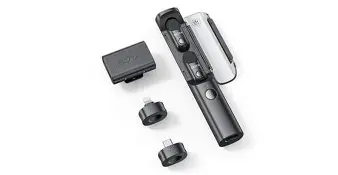
Ultimately, the verdict is clear: if you value your audience's ears as much as their eyes, the Boya Magic is one of the smartest upgrades you can make to your kit this year. It turns the chore of audio recording into a seamless part of the creative process, allowing you to focus on what matters most—capturing the story.