Asus Rog Xbox Ally X Specs, Features, and Value: Is it worth the price tag?
Introduction
The handheld PC market has matured quickly in the past few years, bringing laptop-class silicon into palm-sized enclosures and expanding how people play games away from a desk. The Asus Rog Xbox Ally X sits at the intersection of two strong ecosystems: ASUS's ROG hardware pedigree and an Xbox-first software and service orientation. This article examines what the Ally X offers, how it performs in real-world scenarios, and whether its price reflects the value it delivers for different kinds of buyers.
Product overview: what the Asus Rog Xbox Ally X is trying to be
The Asus Rog Xbox Ally X positions itself as a premium handheld gaming PC tailored toward players who want deep PC compatibility and a console-like experience with tight integration for Xbox services such as Game Pass cloud streaming and Xbox controller mapping. Physically, it resembles other handheld Windows devices with twin analog sticks, shoulder triggers, face buttons, and a compact chassis designed for extended handheld sessions. Internally, it targets high-refresh 1080p gaming from local titles and also aims to be a superior client for cloud gaming, leveraging low-latency wireless and refined software to reduce the friction between streaming and native play.
Key specifications (typical configuration)
Manufacturers often ship multiple SKUs; the Ally X follows that trend by offering a few configurations aimed at different budgets and performance needs. The following represents a typical high-end configuration that most buyers will consider:
- Processor: AMD Ryzen handheld-series APU (Z-series, RDNA-based integrated graphics)
- Graphics: Integrated RDNA architecture optimized for handheld thermals
- Display: 7-inch IPS/LCD, 1080p resolution, up to 120 Hz refresh rate, 400–600 nits peak brightness (adaptive refresh support)
- Memory: 16 GB LPDDR5 (onboard)
- Storage: 512 GB or 1 TB NVMe SSD (user-upgradeable in some SKUs; microSD expansion slot)
- Operating System: Windows 11 with a customized ROG/Xbox overlay for quick access to Game Pass and streaming
- Battery: 40–50 Wh internal battery (manufacturer-rated runtime varies by use)
- Connectivity: Wi‑Fi 6/6E, Bluetooth 5.x, USB-C with DisplayPort Alt Mode, 3.5 mm audio jack
- Weight: Roughly 600–650 grams (varies with battery and build)
- Controls: Hall-effect or capacitive triggers on higher-end models, clickable joysticks, back buttons on some configurations
Design and build quality
ASUS typically balances ergonomics with durability in its ROG handhelds, and the Ally X follows suit. The chassis uses a mix of textured plastics and matte finishes to provide grip during extended sessions. Button placement is conservative—analog sticks slightly offset for natural thumb rest, triggers shaped to reduce accidental presses, and face buttons with clear tactile feedback. For buyers who prioritize portability, the Ally X is pocketable in a backpack or larger jacket pocket but is still larger and heavier than a smartphone with a controller attachment.
Thermals are a design priority in any high-performance handheld. The Ally X includes engineered ventilation and an internal fan system that emphasizes consistent sustained clocks over short-lived turbo peaks. This approach benefits long play sessions but can produce audible fan noise under heavy loads. In practice, ASUS tends to offer multiple performance profiles so users can choose between maximum performance, balanced, or quieter, battery-saving modes.
Display and controls
A crisp, high-refresh 7-inch display is essential for a premium handheld experience, and the Ally X aims to deliver that. The combination of 1080p resolution and 120 Hz refresh gives a smooth presentation for both fast-paced shooters and scrolling menus. Buyers who play primarily cloud games or esports titles will appreciate the higher refresh capability, though battery life will take a hit at higher refresh rates.
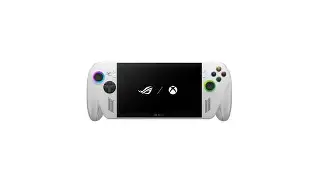
Controls are another area where expectations are high. The Ally X’s analog sticks and face buttons are tuned for responsiveness and repeatability—factors that matter in competitive play. Features like hall-effect triggers or configurable back buttons (present on some models) add value for players who want console-like customization. Haptic feedback is present but more functional than immersive; it helps with tactile confirmation rather than attempting to replicate a console-level rumble profile.
Performance: local gaming and cloud streaming
Performance is where the Ally X makes the most critical trade-offs. In local gaming, the integrated RDNA-based APU targets stable frame rates at 720p–1080p depending on title complexity and power profile. Modern AAA games can run well at medium-to-high settings when thermal and power limits are respected, while esports and older titles will hit much higher frame rates. The device’s performance tuning matters: users who prioritize maximum frames will select a boosted thermal profile and accept louder fans and shorter battery life; those who want longer portable play will choose balanced or battery modes.
Cloud gaming is a distinct advantage. Because the Ally X is marketed with Xbox service integration, it functions exceptionally well as a cloud client. With robust Wi‑Fi (6/6E) and a nearby low-latency network, Xbox Cloud Gaming and other streaming platforms deliver console-like frame pacing and responsiveness. For many buyers, cloud streaming mitigates the need for the very highest local performance while delivering access to a large library via subscription services.
Battery life and thermals in real-world use
Battery life is the perennial compromise in handheld gaming. Expect roughly 1.5–3 hours of demanding AAA local play at high performance settings, with lighter usage (cloud streaming, indie titles, or lower-power modes) stretching toward 4–6 hours. Practical battery runtime varies based on brightness, refresh rate, and whether the device is used for native rendering or cloud streaming. Buyers who want long trips or long train rides will often carry a power bank or accept reduced settings to extend runtime.
Discover deals on Laptops & Computers — updated daily.
Browse Now →Thermal performance influences both sustained frame rates and acoustics. The Ally X tries to prioritize thermal headroom for sustained play, which prevents early throttling but often results in a noticeable fan hum. Users sensitive to noise should test quieter profiles or use headset audio to mask fan noise during gameplay.
Software and ecosystem
Software is a major differentiator. The Ally X runs Windows 11, providing access to the full PC game library—Steam, Epic Games Store, GOG, and more—plus the ability to install emulators and productivity apps. ASUS overlays and quick-access widgets aim to reduce friction between handheld use and desktop workflows, and the Xbox-focused software aims to streamline Game Pass access and controller mapping for cloud titles.
For many buyers, the combination of a full PC operating system and an Xbox-friendly front end is compelling: it enables both a robust native library and a polished cloud experience without switching devices. However, Windows introduces occasional configuration quirks and driver updates that require hands-on maintenance, which can be a downside for buyers who prefer a more appliance-like, maintenance-free experience.
Storage and expansion
Internal NVMe SSDs are fast and make a noticeable difference in game load times. Typical configurations start at 512 GB, which fills quickly with modern titles—especially if installing multiple large AAA games for offline local play. The presence of a microSD slot provides convenient expansion for cloud-heavy users or those who want a portion of their library accessible on removable media, but microSD speeds are slower than NVMe storage, so they are better suited for non-performance-critical installs or media storage.
Real-world use cases: who benefits most?
- Cloud-first gamers: Players who already subscribe to Xbox Game Pass or other cloud services will find the Ally X an excellent client device—portable, quick to start, and typically smoother than console streaming on phones when network conditions are stable.
- PC gamers on the go: Those wanting to play PC-native titles away from a desk will appreciate the Ally X’s Windows compatibility; it’s a good fit for indie libraries, older AAA titles, and competitive esports games.
- Content creators and multitaskers: While not a replacement for a full laptop, the Ally X can run productivity apps for light tasks—note-taking, streaming tools, or quick edits—making it a versatile secondary device.
- Emulation enthusiasts: The device works well for handheld emulation of many platforms, benefiting from the device’s control layout and native PC compatibility.
Pros & Cons
- Pros:
- Strong combination of PC-native compatibility and Xbox cloud streaming integration
- High-refresh 1080p display provides smooth visuals for fast-paced titles
- Flexible performance profiles to balance thermals, noise, and battery life
- Upgradeable storage (depending on SKU) and microSD expansion
- Solid ROG build quality and ergonomic control layout for long sessions
- Cons:
- Battery life is modest during native AAA play and with high refresh rates
- Higher price compared with some rivals, especially for top-tier configurations
- Fan noise can be noticeable at maximum performance settings
- Windows introduces occasional maintenance and driver complexity
- Some users may prefer a more closed, appliance-like experience
Comparison table: Ally X versus relevant alternatives
| Model | Typical CPU/APU | Display | OS | Battery (typical) | Strength | Approx. price tier |
|---|---|---|---|---|---|---|
| Asus Rog Xbox Ally X | AMD Z-series APU (RDNA integrated) | 7" 1080p, up to 120 Hz | Windows 11 (Xbox overlay) | 1.5–4.5 hrs | Xbox cloud integration + full PC compatibility | Premium |
| Asus ROG Ally (standard) | AMD Z-series (varies by SKU) | 7" 1080p, 60–120 Hz | Windows 11 | 1.5–4 hrs | Strong PC performance for handheld | Premium |
| Valve Steam Deck (OLED/Lite) | AMD custom APU | 7" 1280×800 (OLED variant higher color) | SteamOS / Linux (Windows installable) | 2–6 hrs | Best library integration with Steam, robust community tunes | Mid to premium |
Price and value assessment
Price is a subjective value proposition because it depends on how buyers intend to use a device. The Ally X sits toward the higher end of handheld pricing, aligning with premium hardware and services. For buyers who want a self-contained PC capable of running a wide range of games locally—and who also value tight Xbox service integration—the higher price can be justified by the convenience and flexibility offered.
Conversely, budget-conscious players who mainly use cloud services may prefer lower-cost streaming clients or a phone with a controller attachment, because cloud gaming reduces the need for high local processing power. Similarly, users invested in the Steam ecosystem and looking to play a curated Steam library may find better value in a Steam Deck SKU, depending on sales and regional pricing.
Buying guide: what to consider before purchasing
1. Primary use case
Decide whether the device will be used primarily for cloud streaming or for local PC gaming. If cloud streaming (Game Pass, GeForce Now, Steam Link) is the main driver, network quality becomes more important than peak local CPU/GPU performance. If running modern AAA titles locally is the priority, focus on higher-SKU configurations and be prepared to manage battery life.
2. Performance versus battery trade-offs
Understand that higher performance settings increase thermals and reduce battery life. Look at manufacturer power profiles and whether the device allows custom tuning. If portability and longer runtimes are more important than raw frames, prioritize balanced or eco modes and consider purchasing additional portable power like a high-capacity USB-C power bank.
3. Display preferences
Refresh rate and brightness matter. For competitive shooters and fast-action games, a higher refresh rate is valuable. For most single-player RPGs, color accuracy and brightness may be more important. Check whether the specific Ally X SKU offers the desired panel and whether it supports adaptive refresh to save battery in less demanding scenes.
Discover deals on Laptops & Computers — updated daily.
View Offers →4. Storage and expandability
Games are large. If the preferred configuration includes only 512 GB, budget for additional storage or look for models with larger NVMe SSDs. Confirm whether the SSD is user-replaceable and whether a microSD slot is available for cheaper expansion, keeping in mind speed trade-offs.
5. Software and ecosystem
Consider whether the Windows ecosystem is a good fit. Windows provides the broadest app compatibility but sometimes requires maintenance. If a more seamless, game-console-like experience is preferable, ensure the included overlays and integrations actually suit the user's workflow and that they are comfortable performing occasional software updates or driver installs.
6. Accessories
Good accessories can enhance the experience: quality USB-C chargers, protective cases, Bluetooth or wired headsets, and dock solutions for connecting to larger displays. Decide whether a dock is necessary—some users will buy a portable dock to use the device as a living-room streamer or a temporary desktop.
7. Warranty and support
Check warranty terms and regional support options. Handhelds have unique wear patterns and moving parts; a trustworthy warranty and responsive customer service add intangible value, especially for buyers who plan heavy daily use.
Final verdict: is the Asus Rog Xbox Ally X worth the price?
The Asus Rog Xbox Ally X aims to blend the flexibility of a Windows handheld with streamlined access to Xbox services. For buyers who want a premium handheld that easily toggles between native PC gaming and cloud streaming, the Ally X represents compelling value despite a higher price point. It is particularly attractive to Game Pass subscribers, PC gamers who want portability without losing access to their libraries, and power users who appreciate the ability to tweak performance profiles.
However, the device is not for everyone. The steep price is harder to justify for casual gamers who mainly stream or for those who prefer a simpler, maintenance-free console-like experience. Battery life and fan noise are realistic trade-offs that buyers must accept in exchange for sustained performance. In short, the Ally X is worth the price for players who will use its full feature set—native Windows compatibility, high-refresh display, and Xbox integration—on a regular basis. For more casual or single-ecosystem users, more affordable alternatives may deliver better absolute value.
Conclusion
The Asus Rog Xbox Ally X stands out as a thoughtfully engineered handheld for a specific audience: gamers who want PC-level flexibility combined with a polished path into Xbox's cloud and subscription services. It balances performance, ergonomics, and software polish, with trade-offs around battery life and noise that accompany its power. Buyers should match their purchase to their use patterns—if the device’s strengths align with what a buyer values day-to-day, the Ally X can be an excellent investment; if not, there are lower-cost or more appliance-like options that may be a better fit.